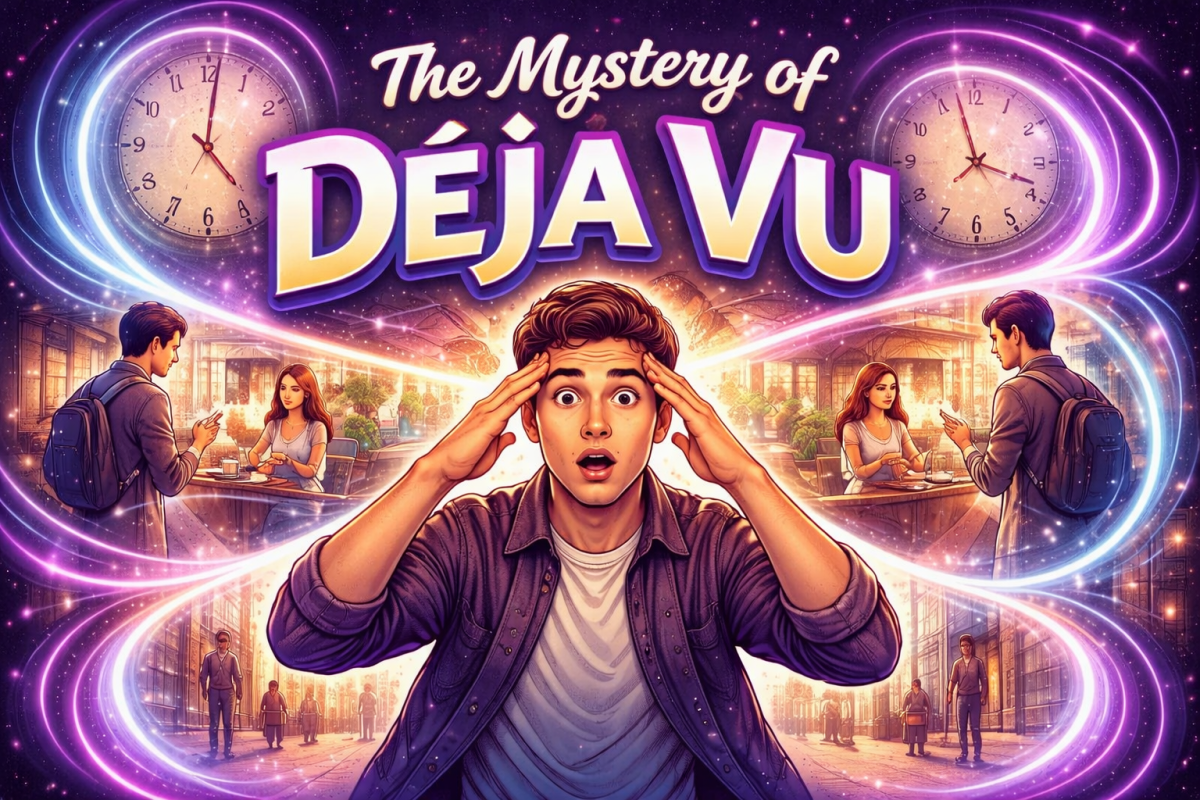
Have you ever walked into a room and felt like you’ve lived that exact moment before? Not just similar but identical. Like the same words being spoken, the same movements, the same feeling in your chest? For a few seconds, it feels like you’re reliving something that already happened… except you know it didn’t. A strange, almost glitch-like experience is called Déjà vu, and it’s one of the most mysterious ways the brain can create. Have you ever really thought deeply about why we get Déjà vu? Like, are we in a simulation? Is it a glitch in the matrix? Well, research shows that tiredness and stress can make you feel Déjà vu more often, or too much dopamine in your brain might also cause it. But why does the brain also experience it even if it’s just a simple conversation? The brain mixes new experiences with old memories due to glitches in familiarity processing, often causing Déjà vu, in which the hippocampus, a part of your brain responsible for your memory and learning, mistakenly flags current sensory input as a past memory. This occurs because the brain prioritizes speed and similarity, using similar past patterns to process present, unfamiliar information, particularly during stress or fatigue. Have you ever walked into a room and felt like you’ve experienced that exact moment before? Not just something similar, but identical—the same words spoken, the same movements, and the same feeling in your chest? For a few seconds, it can feel as if you are reliving something that has already happened, even though you know it hasn’t. This strange, almost glitch-like experience is known as déjà vu, and it’s one of the most mysterious phenomena the brain can create.