
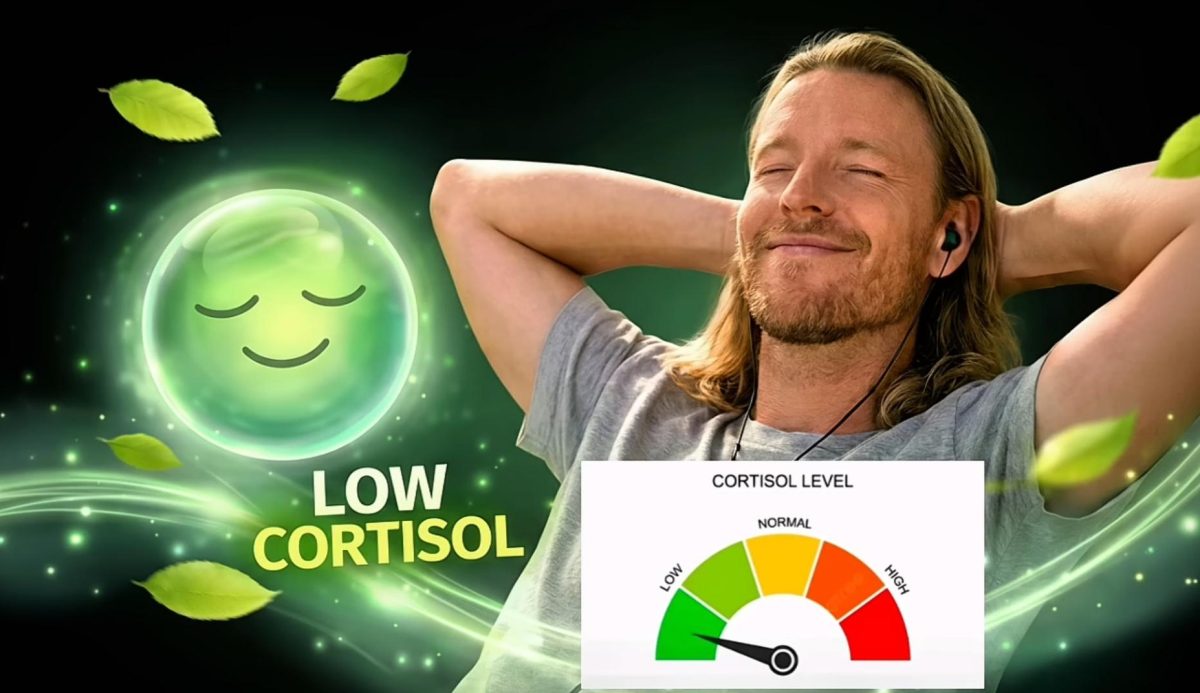
If you’re a young person, or happen to be around young people every day, you’ve probably heard the word ‘cortisol’ being thrown around, low cortisol this, high cortisol that. Does it make you wonder, what do these sayings even mean?
Cortisol is a hormone that your body makes to help regulate your response to stress; it works with certain parts of your brain to control your mood, motivation, and fear. Depending on the levels your body makes, it can impact your health. Symptoms such as headaches, muscle tension, and poor sleep are often the results of these stress levels.
Cortisol was made a popular online trend after a massive surge of influencers started to blame this stress hormone for weight gain, anxiety, and fatigue. Often associated with a popular dance as creators would share an example of something commonly difficult or stress-inducing, calling it high cortisol, which was then outmatched with something low cortisol, low-energy and stress-relieving.

Although this trend is funny for its relatability and relatively harmless, it’s caused a common misconception about stress levels. While high levels of stress can be harmful to the body, the same goes for low levels of stress.
Low levels of cortisol are equally problematic but is usually the result of adrenal insufficiency, leading to symptoms like fatigue, loss of appetite, and low blood pressure.
Cortisol itself isn’t bad, health professionals have proved we need cortisol whether it’s to wake ourselves up in the morning, or to fight off a cold. However, when cortisol becomes dysregulated through chronic inflammation and chronic stress, it can be harmful to the body.
Students who were asked what spikes their cortisol each had very personal responses.
“What usually stresses me out is when I’m not given absolute times,” Hermione, a sophomore student at PHS answered. “I’m a busy person so I keep a planner, when I’m not given a time I’m not able to manage times like I need to in order to keep my mind straight.”
“These last few weeks are stressful, my classes feel like they’ve been dragging on forever,” Hailee, a graduating senior at CHS said.
As I look around my classes, I notice many pale faces looking ahead at nothing thinking only about how awful they feel. Your immediate response is to tell them that they should go home and get some rest. Their response to your comment is if this class or that class wasn’t so important than that’s where they would be.
You then realize that you are not the only student at PHS that has important classes that can’t be missed no matter how tired you are. When a student signs up for college classes or gets their first car which they need to pay insurance and gas for, and end up having to get a job, etc., their levels of cortisol become very dysregulated from the amount of weight that those decisions have, even if it is a step in the right direction for their future.
This happens more times than you think; for whatever reason, it is a shame to see that these students have to go through this. I just hope that in the future students will get the rest they need, plus the money and grades.
Teenagers and young adults, mainly students, deal with lots of stress in their daily lives, whether it’s school, home, the political and economic state of the world, or balancing a job. It’s important to know how to lower your cortisol and regulate your body’s responses to stress.
Consulting an expert on the topic, Mrs. Grade, a nutrition and health teacher here at Pasco, offered her thoughts.
“To control cortisol, you must keep your mind and body grounded. The key to having a balanced and normal level of cortisol is to eat healthy, exercise your mind and body daily, and develop a great sleep routine.”
She’s absolutely right about that, improving these habits alone can go a long way in alleviating your stress. Low levels of stress can enhance your ability to make decisions and adapt to change, and it is highly beneficial to your body.