
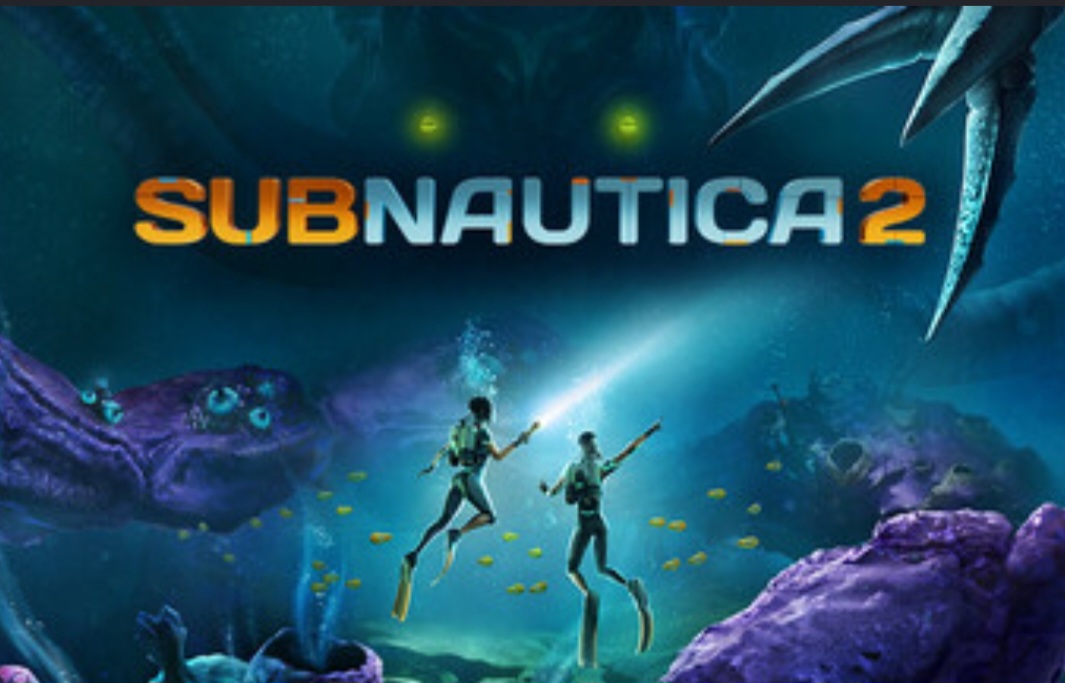
For nearly a decade, the Subnautica series has hidden one of gaming’s richest science-fiction stories beneath miles of alien ocean. On the surface, it is a survival game about crafting oxygen tanks and fleeing sea monsters. Beneath that, however, lies a sprawling tale of corporate greed, extinction-level disease, and the collapse of an ancient civilization. With Subnautica 2 expanding the universe into a new star system, understanding the lore behind the franchise has become essential preparation for the next descent.
The original Subnautica begins with a disaster. The human spacecraft Aurora, owned by the megacorporation Alterra, crashes on the ocean planet 4546B after being struck by an alien defense cannon. The lone survivor, Ryley Robinson, quickly discovers that the planet is under quarantine because of a microscopic plague known as the Kharaa bacterium.
Kharaa is more than a disease. It is essentially a galaxy-wide extinction event. The infection mutates organisms, weakens immune systems, and spreads through ecosystems with terrifying speed. According to in-game lore, billions died after the pathogen escaped containment. The planet 4546B was not where Kharaa originated, but where an advanced alien race — known as the Architects, or “Precursors” by fans — desperately tried to cure it.
The Architects were technologically godlike. They built teleportation gates, artificial intelligence systems, and massive underwater facilities thousands of years before humans reached the planet. Yet their civilization was undone by the same plague they sought to control. On 4546B, they discovered that a colossal creature called the Sea Emperor Leviathan produced a substance known as Enzyme 42, the only known countermeasure against Kharaa.
Their downfall came through desperation. While experimenting on Sea Emperor eggs, the Architects provoked a Sea Dragon Leviathan that destroyed one of their research facilities, accidentally releasing Kharaa into the planet’s ecosystem. Facing catastrophe, the Architects activated a planetary quarantine cannon that automatically destroyed any ship attempting to land or leave. The Aurora became one of its victims centuries later.
What made the first game memorable was not only the lore itself, but how players uncovered it. Story fragments emerged through abandoned habitats, corrupted databanks, and recordings left behind by previous survivors. Every biome felt haunted by failed expeditions and civilizations erased by the sea.
The sequel, Subnautica: Below Zero, shifted the focus northward on 4546B and explored the aftermath of the original game. It introduced Al-AN, one of the final surviving Architects, whose consciousness had survived digitally for centuries. Players learned that the Architects were partially cybernetic beings capable of storing their minds beyond death. The game also revealed Alterra’s continued obsession with Kharaa research, even after a cure existed.
Now, Subnautica 2 appears ready to escalate the stakes dramatically. Early lore reveals suggest the game takes place in a different star system, where thousands of colonists aboard the ship Cicada become stranded after a catastrophic transit accident. More ominously, the Kharaa bacterium may no longer be contained to one planet. Supplemental audio dramas and community discussions hint at entire regions of human space collapsing under renewed outbreaks and biological mutations tied to the infection.
That possibility transforms the series from isolated survival horror into something larger: a slow-moving galactic apocalypse. Humanity, once merely exploiting alien worlds for profit, may now be confronting the same extinction cycle that destroyed the Architects.
In classic Subnautica fashion, though, the answers will almost certainly remain buried in the deep — waiting beneath dark water, strange ruins, and the sound of something enormous moving just beyond visibility.