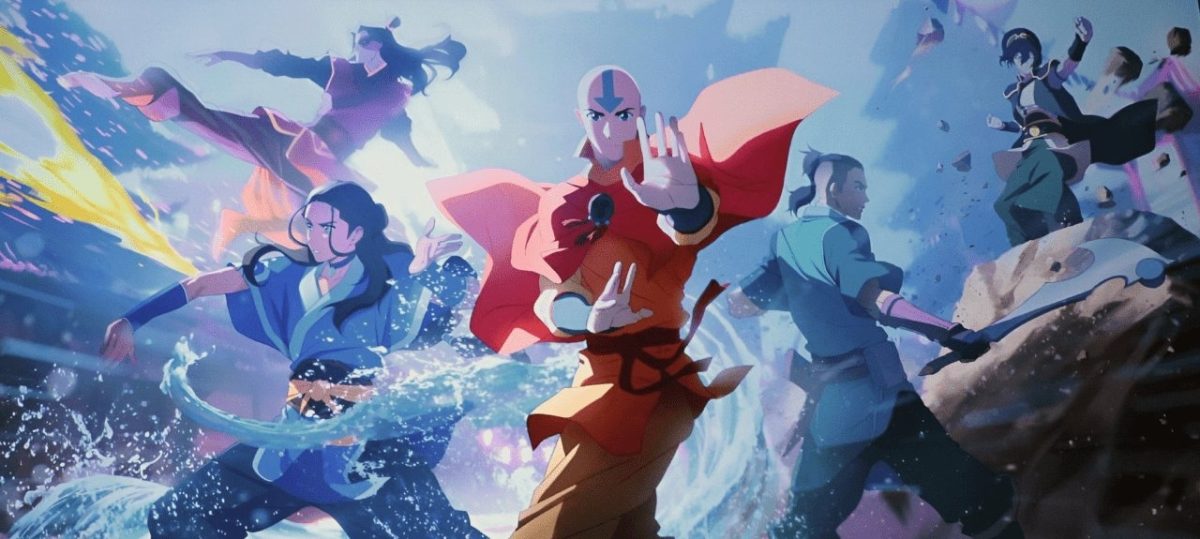
“The Legend of Aang: The Last Airbender”, is an animated film that follows the story Aang the avatar, and his group of friends through an adventure that takes place 12 years after the end of the animated series, “Avatar: The Last Airbender.” When the animated film’s theatrical release was delayed twice and eventually moved to a Paramount+ release instead, fans of the series were outraged, myself included. Following the delay of release from January 2026 to October 10th, 2026, the film was allegedly leaked by a 26 year old Singaporean man in April of 2026.
The fans were upset by the leak, and while many looked down on the leaking of a beloved film for not giving the animators the fair treatment for the project they worked so hard on, many saw it as an attack on Paramount for not giving it a proper theatrical release. I watched the movie, not in spite of animators, not in spite of Paramount, but because I’m a loving fan of the series that I watched in my childhood.
Animation: 10/10
When it comes to the animation of the movie, I loved it, and it was animated similarly to the Spider-man Into/Across the Spiderverse movies, with the chopped frames style.
Story: 9/10
When it comes to the story, it was a good plot and connects well to “Avatar: The Last Airbender” and leads into “The Legend of Korra” very well. There are also plenty of references back to ATLA.
Casting /Character design: 9/10
While looking at the casting and character design, I was concerned about the voices not fitting the characters, but after watching it, I was surprised with how well they fit each individual character. And the character design is no joke either, they made every character look like 12 years happened, but made them look not a day over 22.
Pacing: 7/10
When it came to the pacing, it felt fast in some areas and slow in others. When it came to introducing the bad group, it was slow, but some scenes felt way too fast, and it felt like they could have been drawn out more.
Character growth: 9/10
While I can’t delve too deep into character growth without spoiling things (continue reading for a deeper dive), I can say I was happy with the growth of all the characters between the end of ATLA (Avatar: The Last Airbender) and the time this film takes place.
Music/Sound design: 10/10
For the film, the composer for the animated shows, Jeremy Zuckerman, made a return for the soundtrack, and it fits the movie perfectly. Each scene has music that perfectly encapsulates the moment.
*SPOILER WARNING: I will be discussing the film following this message, so if you don’t want to spoil the movie for yourself, please come back AFTER you have seen the film yourself, and enjoyed it yourself. Thank you and you have been warned.*
The following content will be split into sections describing the things I liked and my criticisms about each aspect of the film.
When it comes to the animation of the film, I was quite impressed. It was in production for 4 years, and it was 4 years well spent on each and every scene, from the opening scene in the beginning with Aang’s nightmare, all the way to the eternal storm sequence and the spirit world scene where all the characters go to a random age in their life. The references to both ATLA (Avatar: The Last Airbender) and TLOK (The Legend of Korra) in so many scenes with the cabbage man, the foaming mouth guy, and the age transformation in the aforementioned spirit world scene, where Sokka and Aang are thrown back to ATLA age, Zuko and Katara are TLOK age, and Toph an Momo are babies. Overall, the animation style fits the film perfectly, and was made each movement feel like it had a purpose.
With the story, there were things I was both happy with and in-between on. For example, the “Golden Age of Airbenders” would have been mentioned somewhere in Aang’s generation of Airbenders, as a story or fairytale. The fact that an airbender doesn’t know about it, makes it feel like it’s something that doesn’t quite belong. Some may argue that if Sonam was known as the Lost Avatar, maybe the airbender utopia was forgotten too. However, that still wouldn’t happen because if Sonam was forgotten, a massive utopia wouldn’t disappear and would be there for centuries. So it just doesn’t add up.
When it came to casting and character design, they made all the characters fit, and very attractive to most people online. One big one I see is Toph, who is being called countless terms that shouldn’t be said in public. And due to the film being leaked, I am unable to find any pictures online to show as a reference. But all the characters look 12 years older without looking extremely old.
The pacing was effective in certain moments, creating a sense of momentum and engagement, but overall it felt uneven. While some sections moved quickly and kept the story flowing, others lingered or rushed in ways that disrupted the rhythm. This inconsistency became most noticeable in the final climax, which, despite a significant amount of buildup, felt surprisingly brief and underdeveloped, leaving the resolution less impactful than it could have been. As a result, the emotional payoff didn’t fully land, making the ending feel somewhat rushed rather than satisfying.
The character growth is where everything shines. Aang’s journey of trying to preserve his peoples’ heritage turns into desperation for a power that could harm more than heal. Sonam’s staff gets turned over to Tagah after his true motives are revealed. This causes Tagah to give airbending to The Denied, so Tagah can bring back the airbending utopia. After the battle is won and Aang retakes the staff, he is corrupted and breaks the staff to make sure it can’t harm anyone anymore. This shows that even in corruption as the most powerful being, he can overcome his desperation for his people and learn that he can’t bring his people back quickly, it has to be a longer and more educating process of reviving his culture. This is why towards the end of the film, he founded Air Temple Island, and is teaching the culture of airbenders to acolytes, typically non-benders. This also shows us the process of Air Temple Islands creation, something we don’t get much of in the follow up series, The Legend of Korra.
Overall, The Legend of Aang: The Last Airbender delivers a visually stunning and emotionally resonant continuation of a beloved universe, even if it stumbles in a few structural areas. Its strengths lie in its breathtaking animation, strong voice casting, and powerful musical score, all of which work together to capture the spirit of both Avatar: The Last Airbender and The Legend of Korra. While the story remains engaging and thematically meaningful—especially in its exploration of legacy, cultural preservation, and Aang’s personal struggle—the uneven pacing and rushed climax prevent the film from fully realizing its potential. Even so, the character development and world-building offer rewarding depth for longtime fans, making the film feel like a meaningful, if imperfect, continuation of Aang’s journey and the world he helped shape.